
Montserrat
Last updated: 26 January 2026
At a glance
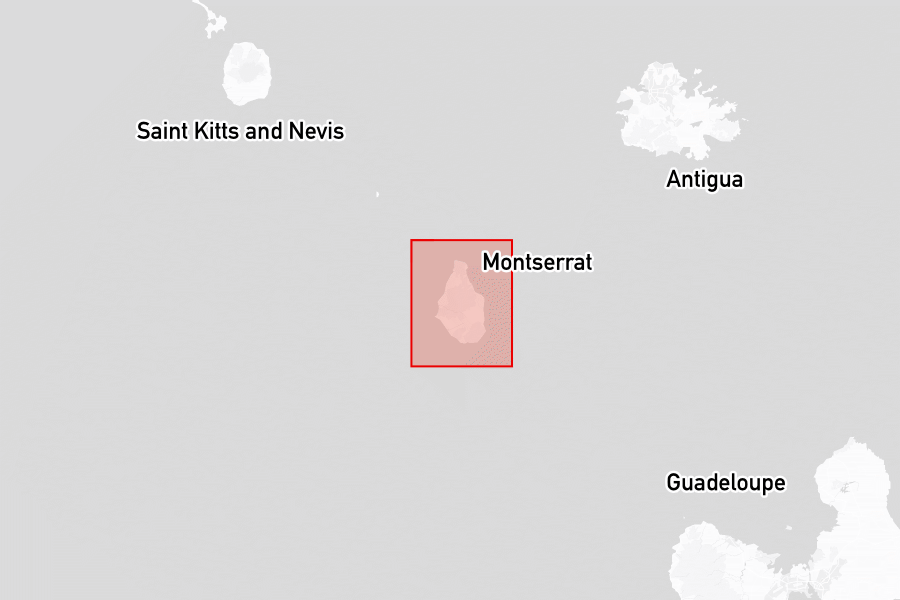
Montserrat is a small island in the Lesser Antilles where an active volcano and steep green hills dominate the landscape. Visiting yachts usually stop briefly to clear in, explore the volcano’s impact on the island, and enjoy the quiet anchorages before continuing along the Leeward Islands chain.
Attractions
The northern part of Montserrat, particularly around the settlement of Little Bay, serves as the main point of interest for visiting yachts. While the island has fewer amenities in comparison to some other destinations in the Caribbean, the natural beauty and unique volcanic features hold a strong allure for exploration.
Nearby, the National Museum of Montserrat provides context on the island’s history, culture, and the impact of volcanic activity on everyday life. A short trip inland also leads to the Montserrat Volcano Observatory, where visitors can learn about the Soufrière Hills volcano, ongoing monitoring efforts, and how eruptions reshaped much of the island.
Places to stay
Below are the most popular and highly rated places to stay, based on reviews from the noforeignland community:
Anchorages

|
Rendezvous Bay
★
4.3
Rendezvous Bay presents a beautiful setting with sandy bottoms and good holding for anchors. Conditions can be rolly at times, with significant swell noted in some reviews. Visitors appreciate easy access to customs and the opportunity for snorkeling along the cliffs.
|

|
Old Road Bay
★
4.0
The anchorage offers reasonable holding in sandy conditions, with depths around 5 to 6 meters. Visitors experience a mix of some discomfort from swell and varying wind protection. Adequate space for anchoring is noted, particularly on calmer days.
|

|
Little Bay
★
3.8
Anchoring at Little Bay can be quite rolly, especially with a northern swell. Visitors found easy clearance procedures and noted the helpfulness of locals. Access to tours, particularly with local guides, offered enriching experiences.
|
Yacht clearance links
Useful yacht clearance links:
- Sail Clear: Pre arrival notification
- https://sailclear.com/index
- Noonsite: Clearance procedures, processes and fees.
- https://www.noonsite.com/place/montserrat/
Yacht clearance reviews
The following lists summarize noforeignland user reviews for clearing in at ports of entry and when using clearance agents in Montserrat:
Ports of entry offices
|
Offers: Customs, immigration, and port authority.
Efficient check-in procedures are available at this port authority, with reports of friendly staff. Visitors can clear both in and out simultaneously, which facilitates shorter stays of up to 72 hours. Costs for check-in vary based on vessel size and time.
Place details mention: check in steps, fees or payments, opening hours, prearrival requirements and departure requirements.
|
Notes for mariners
Montserrat’s coast has volcanic exclusion zones where access may be restricted or prohibited. Skippers should check the latest hazard level and zone maps from the Montserrat Volcano Observatory, along with current government travel and safety advisories, before arrival.
The off-season
In the off-season, most cruisers choose to leave Montserrat due to its exposure to Atlantic hurricane paths.
Facts for visitors
- Best times of year to sail here: December to May
- Most common type of shore power: 120V 60Hz
- Cost for provisioning: High
- Currency: Eastern Caribbean Dollar (XCD)
- Personal security: Generally safe with routine caution advised
- Emergency phone numbers:
- Police: 911
- Fire: 911
- Ambulance: 911
- Coast Guard: +1 (664) 496-1047
- International dialing code: +1 664
- Time zone(s): UTC -4
Maritime history
Montserrat's maritime history began with the arrival of European settlers in the late 17th century, a period marked by tumultuous changes. The British established a colony, and Montserrat became an important shipping hub due to its fertile lands and strategic location in the Caribbean. The island's coastlines facilitated trade routes, linking British commerce with the wider Caribbean.
The colonial era was dominated by sugar plantations and naval engagements. Montserrat's deep waters and coastal geography made it an important naval outpost. However, its development was disrupted by natural events, notably the volcanic eruptions that altered both its landscape and maritime activity.
In contemporary times, Montserrat has reinvented its maritime identity, focusing on conservation and sustainable tourism. The establishment of marine reserves and eco-tourism initiatives reflects a shift towards preserving its natural heritage. The rebuilt capital, Little Bay, now serves as the central harbor, continuing its historical legacy.
Despite the changes, Montserrat’s rich history is captured in its cultural sites. The island, once known as the "Emerald Isle of the Caribbean," continues to attract sailors with its unique volcanic landscapes and rich historical tapestry, offering an intriguing stop for those exploring the Caribbean Sea.