
Costa Rica
Last updated: 27 January 2026
At a glance
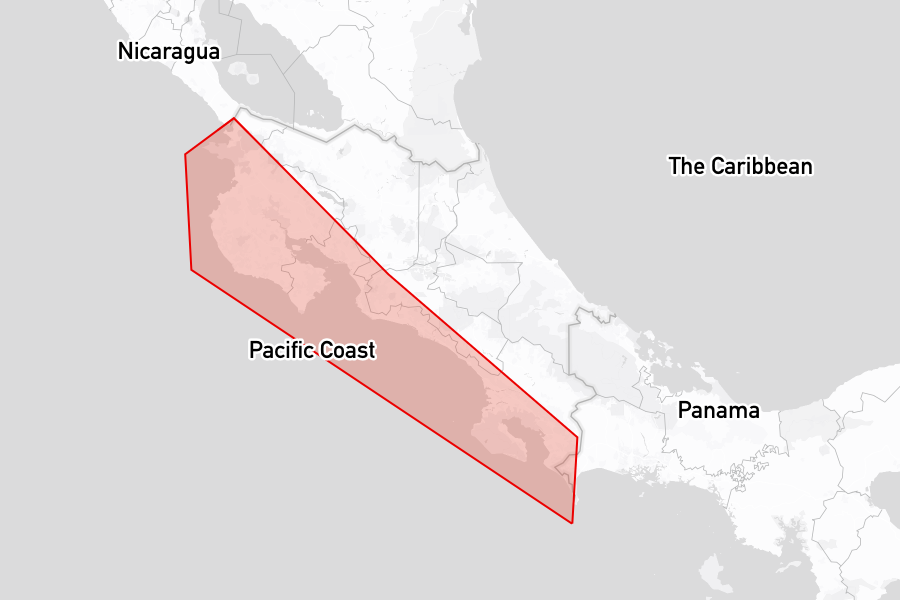
The main cruising ground in Costa Rica lies along its Pacific coast, offering protected bays and secluded anchorages backed by a mountainous, tropical interior. The country itself spans the isthmus between Nicaragua and Panama and faces both the Pacific Ocean and the Caribbean Sea.
Attractions
Puntarenas operates as an important local hub, providing additional docking facilities, urban amenities, provisioning opportunities, and connections for those planning to explore further along the coast or inland.
The Curu Wildlife Refuge is a notable draw for visitors interested in Costa Rica’s rich flora and fauna. Located on the Nicoya Peninsula, it offers access to hiking trails and is a well-known spot for observing animals such as capuchin monkeys and coatis.
Further south, mariners can explore a lush, remote river by dinghy from Bahia Drake, where wildlife such as crocodiles and macaws can be observed in their natural habitat.
Places to stay
Below are the most popular and highly rated places to stay, based on reviews from the noforeignland community:
Anchorages

|
Islas Murciélagos
★
5.0
This anchorage presents a stunningly beautiful setting. Visitors encountered friendly rangers who cautioned against approaching turtle nests. Advanced tourist permits are recommended for a prolonged stay, but some were allowed overnight anchoring without charges.
|

|
Bahia Santa Elena
★
4.9
Beautiful and well-protected, the anchorage offers clear, calm waters ideal for rest. Visitors appreciate the absence of other boats and the tranquil environment, though some mention strong gusts from the Papagayo winds. Facilities for payment and local regulations may cause confusion.
|

|
Dolphin Quest Anchorage
★
4.7
Anchoring can be slightly rolly, especially with afternoon winds and swell. Meals at Dolphin Quest are well-regarded, highlighted by a farm-to-table experience. Some visitors encountered issues with a neighboring property owner asserting unwarranted authority over anchoring positions.
|

|
Isla Cedros Jesusita
★
4.6
A calm and sheltered anchorage, popular for restful nights and easy access to a nearby ferry. Cleanliness of water varies, and local dining options are available but can be pricey. Mosquito presence noted at dusk.
|

|
Bahia Nacascolo
★
4.6
An anchorage with a calm environment, making it suitable for a peaceful night if no northern or eastern winds are present. Visitors appreciated the clean water and sound holding. The beach can be busy during the day, but it offers charm after hours.
|

|
Curu
★
4.5
A bit rolly anchorage with generally good holding conditions. Visitors highlighted wildlife and hiking opportunities at the nearby preserve. The stern anchor is advisable due to swell, while dinghy access to shore is convenient.
|

|
Drake Bay
★
4.5
Calm conditions and good holding were noted by several visitors. Access to the dinghy dock provided convenience for exploring town and surrounding nature. Many enjoyed the wildlife and hiking trails, though some reported rolly nights and a need for a stern anchor.
|

|
Bahia Ballena - Pochote
★
4.4
Merely good holding is reported, but sinking water quality and considerable debris raise concerns. The anchorage experiences heavy panga traffic and a bustling beach, impacting comfort. Visitors have found the location picturesque, with occasional calmer conditions.
|

|
Playa Conchal
★
4.4
Anchoring is generally comfortable in 18 feet of water with solid holding. Conditions are calm except during N-NW winds when swell can be significant. Multiple visitors mention easy beach landings and a spacious bay, enhancing the overall experience.
|

|
Anchoring near Banana Bay Marina offers flat and calm conditions with good holding in mud. Dinghy services are convenient, including laundry at the marina office. The local area provides easy access to supermarkets and dining options.
|
Marinas
|
No image
|
Costa Rica Yacht Club
★
5.0
Excellent service provided during haul-out procedures. Visitors reported friendly staff and proper travel lift availability. Access may require precise timing due to current conditions.
|

|
Marina Bahía Golfito
★
4.8
Staff are reported to be friendly and helpful. A fish tackle shop is available, while a stay can be costly for certain vessel sizes. Visitors should also be cautious of crocodiles when diving on their hulls.
|

|
Fish Hook Marina
★
4.8
The marina features responsive staff, well-maintained docks, and a clean environment. Security is noted as positive, and some visitors highlight efficient communication via WhatsApp. Amenities such as laundry facilities are functional, though some minor sensory issues may be present.
|

|
Banana Bay Marina
★
4.6
Yessica and the staff offer notable support during check-in and check-out processes. Visitors appreciate the restaurant's quality and the overall amenities provided. The marina’s facilities are adequate but may show signs of age, particularly regarding dock conditions.
|

|
Marina Papagayo
★
4.5
The marina features clean facilities and a well-managed environment. Staff assistance is highlighted positively, especially during emergencies. Visitors mention that prices are high but reflect the quality of amenities and services provided.
|
Boat services
Below are the most popular and highly rated boat services, based on reviews from the noforeignland community:
Chandlers

|
A wide array of consumables and project-based products is available at the chandler. Visitors may find useful items for their projects. The store offers a suitable selection for various needs.
|

|
CR Marine Supply
★
3.0
A small marine store offers a variety of products. Prices are noted as high, but availability may assist those in remote locations. Visitors should check recent Reviews for additional context or updates.
|

|
Limited selection of products is noted, particularly for smaller engines. Visitors observe the presence of numerous cleaning products. Additional experiential details were not supported by multiple reviews.
|

|
Lutz Yamaha
★
3.0
This chandler allows visitors to explore its store. It is worth stopping by for browsing. Further reviews may provide additional context regarding the overall experience.
|

|
El Jobo marine store
★
3.0
The chandler operates with items behind a counter, requiring customers to know what they want. Castrol synthetic oil is available at 80 USD per gallon, with discounts for members of a posse. Visitors should check recent Reviews for additional context or updates.
|
Boat services
|
Luis performs mechanics work on diesel engines. He assisted with locating a leak and replacing a circulation pump, demonstrating careful and precise workmanship. Reviews indicate he is reliable and helpful in obtaining parts.
|
Yacht clearance links
Useful yacht clearance links:
- Costa Rica Ministry of Health: Forms to complete and email
- https://drive.google.com/drive/folders/1PX1LqsOvgKiz7mWE4SCe5FE-ptXC9B3c
- Noonsite: Clearance procedures, processes and fees.
- https://www.noonsite.com/place/costa-rica/
Yacht clearance reviews
The following lists summarize noforeignland user reviews for clearing in at ports of entry and when using clearance agents in Costa Rica:
Ports of entry offices
|
Checkout procedures appear efficient, with interactions described as quick. However, a lengthy wait of about 90 minutes was noted at the bank. Visitors have documented the steps involved in both check-in and check-out processes.
Place details mention: check in steps, required documents, fees or payments, prearrival requirements, departure requirements, official inspections and official boardings.
|
|
Offers: Port authority.
Administrative efficiency is noted, with a streamlined process for check-in and check-out. Visitors mention friendly staff and recommend completing paperwork early to avoid delays. Most interactions take a few hours, primarily due to bank payment processing.
Place details mention: check in steps, required documents, opening hours and temporary import requirements.
|
|
Offers: Immigration.
The immigration office provides a quick check-in process, with a typical completion time of around 5 to 10 minutes. Visitors report friendly staff and an efficient workflow, though some have experienced delays if arriving later in the day. It's advisable to arrive early to avoid complications.
Place details mention: check in steps and required documents.
|
|
The check-in procedure includes multiple steps, with most reviews highlighting friendly staff and helpfulness. English-speaking assistance is available but varies. Visitors recommend preparing all necessary documentation in advance, as efficiency can vary during the process.
Place details mention: check in steps, required documents and departure requirements.
|
|
Offers: Port authority.
Efficient service is noted at this port of entry, with staff providing assistance for documentation and zarpe. Visitors experience variability with waiting times, especially depending on the day of the week. The younger staff member spoke excellent English, aiding the overall process.
Place details mention: check in steps and fees or payments.
|
|
Offers: Quarantine.
The office facilitates the clearance process, with appointments arranged for health inspections on board. Visitors not moored at the nearby marina must pay for health checks at a bank before returning to their vessels. It generally operates as expected in this administrative capacity.
Place details mention: check in steps, prearrival requirements and official inspections.
|
|
Golfito Customs office
★
3.8
Offers: Customs.
Certain procedural details for checking in and out at Golfito Customs are confirmed by multiple visitors. English is not commonly spoken, and bringing copies of documents is preferred. Processing times vary, with some reports of efficient service.
Place details mention: check in steps, required documents, fees or payments and temporary import requirements.
|
|
Playas del Coco Customs
★
3.7
Offers: Customs.
Check-in processes at the customs office can involve significant waiting times and a lack of seating, as noted by visitors. Staffing interactions vary, with some agents exhibiting rudeness under busy conditions. Multiple options for transportation to the office are available, including buses serving the area.
Place details mention: check in steps and required documents and temporary import requirements.
|
|
Capitania de Caldera
★
2.0
Offers: Port authority, and domestic movement reporting.
Obtaining a zarpe for travel between Puntarenas and Golfito can be challenging without an agent. Visitors reported high expenses and significant waiting times, with a process that took several hours to complete. The requirement for a bank payment and receipt adds to the complexity.
Place details mention: departure requirements and fees or payments.
|
|
Offers: Domestic movement reporting.
The port captain at Puntarenas does not serve cruisers effectively, as a reviewer reported needing to go to Caldera for a national zarpe. A digital service was recommended instead. Visitors should check recent Reviews for additional context or updates.
Place details mention: departure requirements.
|
Yacht clearance agents
|
Assistance for the check-in procedure is available from Yessica at Banana Bay marina. Visitors reported friendly interactions and indicated that the inspection could be organized by Yessica, emphasizing a helpful and efficient service experience.
Place details mention: required documents, fees or payments, prearrival requirements and departure requirements.
|
Notes for mariners
Papagayo winds dominate the dry season, often blowing 20–40 knots from the northeast and accelerating through gaps to create steep, short seas and choppy anchorages. Long‑period southwest swell rolls into the Pacific coast for much of the year, making some anchorages rolly.
Typical tidal range is 2-3 meters.
Foreign recreational vessels require a national zarpe to move from one port to another within Costa Rica. Reports indicate that this may be difficult to obtain unless using an agent.
The off-season
During the off-season, most private yachts tend to depart Costa Rican waters primarily due to the rainy season and hurricane risks in surrounding areas. Facilities for liveaboards are limited. Those seeking alternative locations often head to more sheltered parts of Panama.
Facts for visitors
- Best times of year to sail here: December to April
- Most common type of shore power: 120V 60Hz (240V connections are available in some marinas)
- Cost for provisioning: Medium
- Currency: Costa Rican Colón (CRC)
- Personal security: Generally safe, but usual precautions recommended in public areas.
- Emergency phone numbers:
- Police: 911
- Coast Guard: 911
- Ambulance: 911
- International dialing code: +506
- Time zone(s): UTC -6 year‑round (no daylight saving time)
Maritime history
Costa Rica's maritime history is modest yet intriguing, deeply connected to its indigenous roots and the influences of colonial exploration. Early inhabitants along the Pacific coast relied on intricate navigation and fishing skills, setting a foundation for modern sailing activities. The arrival of Spanish explorers in the 16th century marked the beginning of European influence, as the coastal regions served as vital stopovers for expeditions from Panama to Mexico.
The colonial era saw the establishment of the port of Puntarenas, which became a key trading hub by the late 18th century. This development facilitated the export of regional agricultural products like coffee, which was transported down the mountainous terrain to be shipped overseas. However, Costa Rica's maritime activities were often overshadowed by land-based trade and agriculture, leading to a more subdued sea history compared to its neighbors.
Today, Costa Rica's maritime activities are diverse, encompassing fishing, environmental conservation, and recreational sailing. Efforts to preserve marine ecosystems are prominent, with several marine reserves established along the Pacific coast. These initiatives not only protect the country's rich biodiversity but also attract eco-conscious sailors and travelers wishing to explore untouched natural waters.
Though less marked by elaborate historical maritime landmarks, Costa Rica’s coastline offers numerous isolated bays and ecological wonders that intrigue modern sailors. These natural attractions and the ongoing focus on sustainable tourism reflect the country's progressive approach to both its land and waters.