
Cook Islands
Last updated: 24 March 2026
At a glance
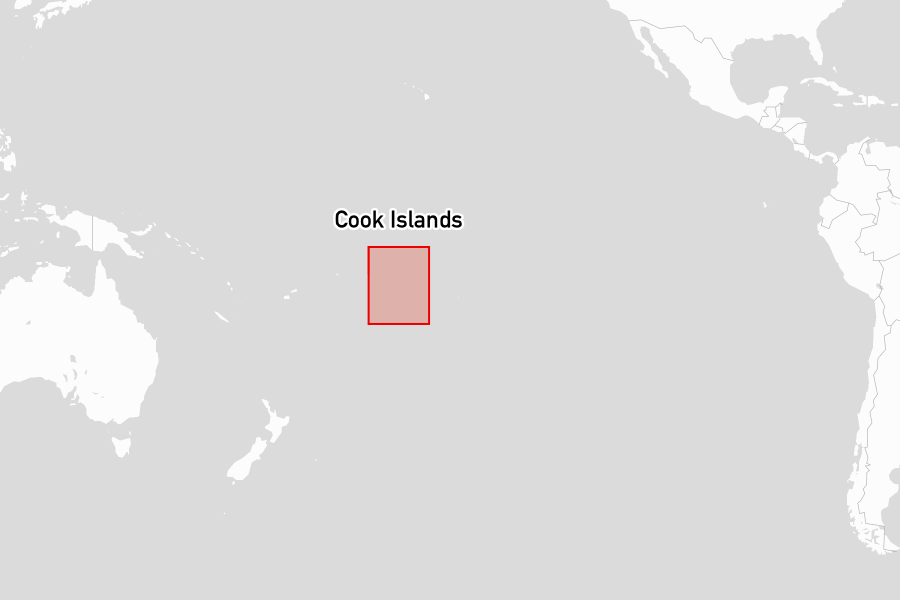
The Cook Islands consist of 15 small islands scattered across more than two million square kilometres of the South Pacific, from Penrhyn in the far north to Mangaia in the south. The Cook Islands are a self‑governing state in free association with New Zealand, whose citizens hold New Zealand citizenship. The resident population is predominantly Polynesian, with Cook Islands Māori and English both recognised as official languages. For cruising yachts the Cook Islands form a convenient mid‑ocean stop on the trans‑Pacific passage between French Polynesia and destinations such as Tonga, Niue, Samoa or New Zealand.
Attractions
On Rarotonga, yachts use the harbour at Avatiu on the north coast, with steep forested valleys and rugged volcanic peaks rising immediately inland.
Aitutaki is known for its shallow turquoise lagoon, boat trips to outlying sandbars, and reliable trade‑wind conditions, perfect for kitesurfing and foiling.
The more remote atolls of Suwarrow and Palmerston are well‑known optional stops for cruising yachts, but both require advance permission and have limited seasons and facilities.
Places to stay
Below are the most popular and highly rated places to stay, based on reviews from the noforeignland community:
Anchorages

|
Te Tautua Anchorage
★
5.0
Penrhyn
Sandy anchoring spots with solid holding are available in the area. Visitors appreciate the well-protected anchorage and friendly atmosphere in the village. Navigation through bommies is possible, although caution and use of satellite photos are recommended for accuracy.
|

|
Suwarrow
Snorkeling opportunities and welcoming hosts enhance this peaceful anchorage experience. The entrance is wide and deep, providing easy access. A focus on fresh produce donations for rangers is advisable as resupply is limited during their six-month stay.
|

|
Palmerston
★
4.5
Palmerston
Most visitors experienced a warm welcome and generous hospitality from the local families. There are currently challenges with anchoring on coral, and the community encourages cruisers to assist in restoring moorings. Supplies like fresh produce and mooring materials are needed.
|

|
Omoka Village, Penrhyn
★
3.2
Penrhyn
Anchoring presents challenges due to coral bottoms and a lack of protection from prevailing winds. Visitors appreciate the friendliness of the local people and the necessity of clearing in at the anchorage. Conditions can be uncomfortable, especially during strong winds.
|
Harbours

|
Aitutaki
The harbor features a mix of mooring options with depths generally ranging from 4 to 12 feet. Visitors benefit from a welcoming community, though aid is crucial for secure docking. Basic facilities are limited, and expect to manage your own services.
|

|
Avatiu Port
★
2.6
Rarotonga
Access to Avatiu Port involves using a dinghy for shore access, which may be difficult in mild swell. The harbour has a limited capacity, only accommodating a few vessels. Staff are reported to be friendly and provide assistance with mooring.
|
Yacht clearance links
Useful yacht clearance links:
- Noonsite: Clearance procedures, processes and fees.
- https://www.noonsite.com/place/cook-islands/
Yacht clearance reviews
The following lists summarize noforeignland user reviews for clearing in at ports of entry and when using clearance agents in Cook Islands:
Ports of entry offices
|
Aitutaki Customs Office
★
5.0
Aitutaki
Assistance with customs and immigration is available at the Aitutaki Customs Office. The staff is noted for being helpful and friendly. Departure fees are specified as 80.80 NZD per person, and a health check fee is 25 NZD.
Place details mention: required documents, fees or payments, opening hours, official inspections and official boardings.
|
|
Penrhyn
Customs check-in requires retention of the check-in document until departure. Entry fees in NZD include: 20 for entry, 20 for health clearance, 20 for biosecurity, and 60 for customs. Payment is only accepted in NZD cash.
Place details mention: check in steps, fees or payments and official inspections.
|
|
Suwarrow
Suwarrow's check-in process is noted to be efficient, with rangers providing assistance. Visitors should be aware that Suwarrow is currently closed and not accepting new arrivals. Check recent Reviews for additional context or updates.
|
|
Tongareva Customs
★
3.0
Penrhyn
The check out process includes extensive forms requiring details about the vessel and equipment. Fees are NZ$84.16 per person for check out. While thorough information is requested, it does not seem to hinder the process if some details are missing.
Place details mention: check in steps, required documents, fees or payments and official inspections.
|
Notes for mariners
Permission to visit Suwarrow and Palmerston must be arranged in advance with the Cook Islands Customs Service, and for Palmerston also with the Palmerston Island Administration. Once there, visiting yachts may be restricted to using designated anchorage areas. Suwarrow is closed during the cyclone season, when no yacht visits are permitted.
The off-season
During the off‑season (November to April), yachts tend to leave the Cook Islands due to increased cyclone risk.
Facts for visitors
- Best times of year to sail here: May to October
- Most common type of shore power: 220-240V 50Hz
- Cost for provisioning: High
- Currency: New Zealand Dollar (NZD)
- Personal security: Generally safe, with occasional risks typical to isolated areas
- Emergency phone numbers:
- Police: 999
- Fire: 999
- Ambulance: 999
- International dialing code: +682
- Time zone(s): UTC-10
Maritime history
The maritime history of the Cook Islands begins with early Polynesian voyagers who crossed the Pacific using non‑instrument navigation, guided by stars, swells, and bird and cloud patterns. These islands lay along important Polynesian voyaging routes across the central South Pacific, and many traditional stories and place names reflect this deep seafaring heritage.
Regular European contact developed from the late 16th century, and was later reinforced by the voyages of Captain James Cook in the 18th century, after whom the islands are named. During the 19th and early 20th centuries, the Cook Islands took part in regional Pacific trading networks, particularly in commodities such as copra and pearlshell, while also becoming a hub for missionaries and colonial administrators.
In the modern era, the Cook Islands have maintained a maritime culture closely linked to both Polynesian traditions and contemporary ocean travel. Rarotonga and Aitutaki, with their reef‑fringed lagoons and sheltered bays, attract inter‑island shipping, fishing vessels, and an increasing number of cruising yachts.
Today, visiting sailors encounter visible traces of this layered maritime past alongside everyday island life. Features such as the ancient Ara Metua road on Rarotonga, historic church settlements near the coast, and long‑used landing places provide tangible links between early voyaging societies, the colonial period, and the Cook Islands’ present‑day role on South Pacific cruising routes.